Engineering colleges across India are constantly looking for innovative technical workshop ideas that go beyond conventional classroom learning. Whether it is an annual technical fest, department-level event, student development program or an industry-oriented training session, the right workshop can transform how students experience engineering.
But with so many conventional coding sessions, seminars and software workshops already available, how can colleges organise something genuinely different?
The answer lies in hands-on technical workshops that encourage students to build, experiment, solve problems and apply engineering concepts in real-world scenarios.
From CubeSat building and space robotics to artificial intelligence, rocketry and autonomous systems, there are several exciting workshop ideas that engineering institutions can explore.
In this article, we explore 15 unique technical workshop ideas for engineering colleges in India, including their learning outcomes, target departments and potential applications in technical festivals, academic programs and student activities.
Why Should Engineering Colleges Organise Hands-On Technical Workshops?
Technical workshops provide students with opportunities to apply concepts learned in classrooms through practical activities. They can complement academic curricula, encourage interdisciplinary collaboration and introduce students to emerging technologies.
For colleges organising technical festivals or academic events, hands-on workshops can also increase student engagement and provide opportunities to explore unfamiliar engineering disciplines.
Some of the key benefits include:
- Practical learning: Students apply theoretical concepts through hands-on activities.
- Skill development: Workshops introduce technical tools, hardware, software and engineering techniques.
- Interdisciplinary exposure: Students from different departments can collaborate on shared engineering challenges.
- Innovation and problem-solving: Participants experiment, troubleshoot and develop solutions.
- Career exploration: Students discover emerging fields such as space technology, robotics, AI and embedded systems.
- Technical fest engagement: Interactive workshops provide a more engaging alternative to conventional lecture-based sessions.
15 Unique Technical Workshop Ideas for Engineering Colleges
Here are 15 innovative technical workshop ideas that colleges can consider for their next technical fest, engineering department activity, student development program or institutional event.
1. CubeSat Building and Satellite Technology Workshop
Best suited for: Aerospace Engineering, Electronics and Communication Engineering (ECE), Electrical Engineering, Mechanical Engineering, Computer Science and interdisciplinary student groups.
What if students could build and test their own miniature satellite?
A CubeSat workshop introduces participants to the fundamentals of satellite engineering through educational satellite kits. Students explore satellite structures, onboard electronics, sensors, communication systems and hardware integration.
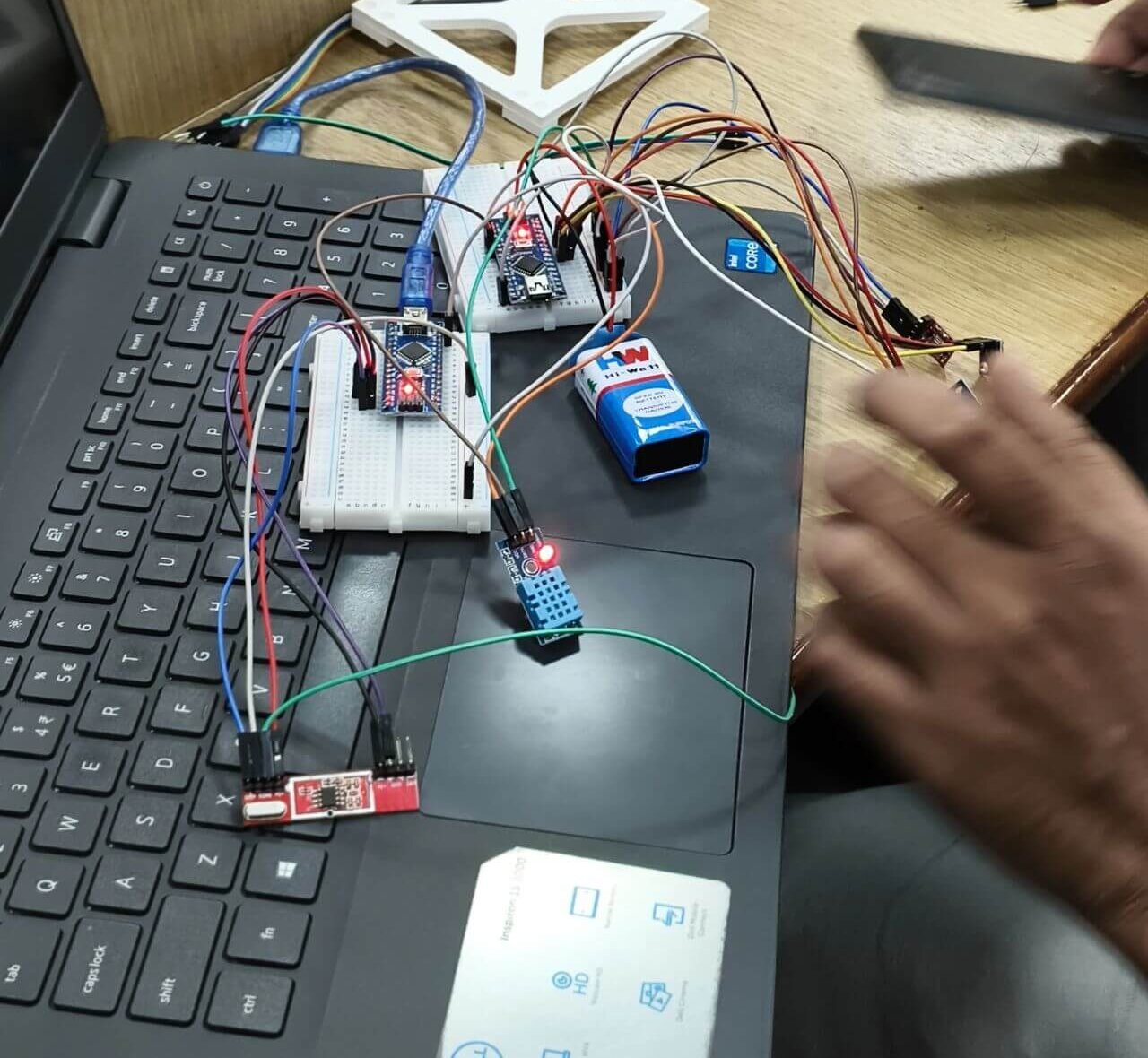
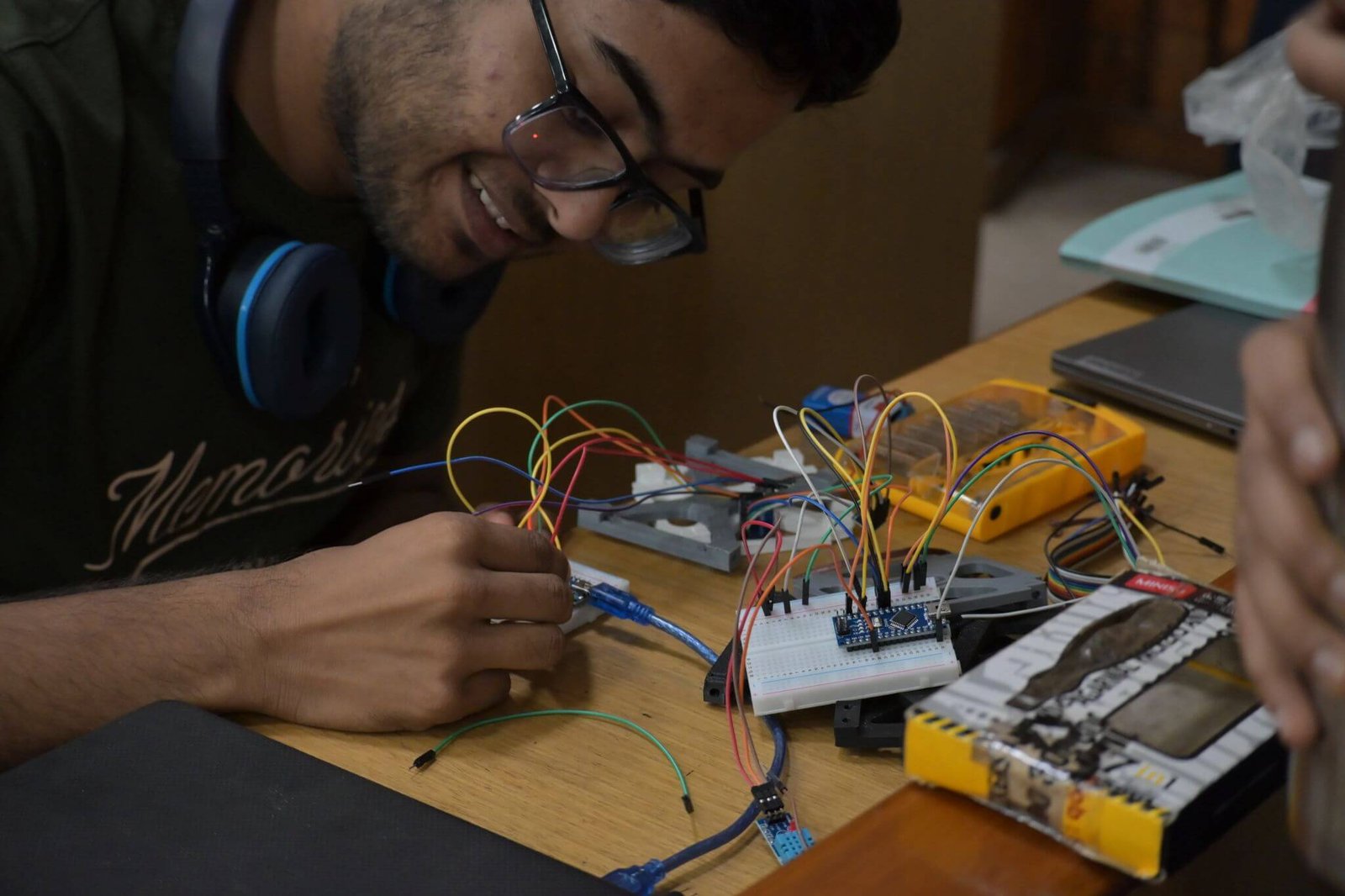
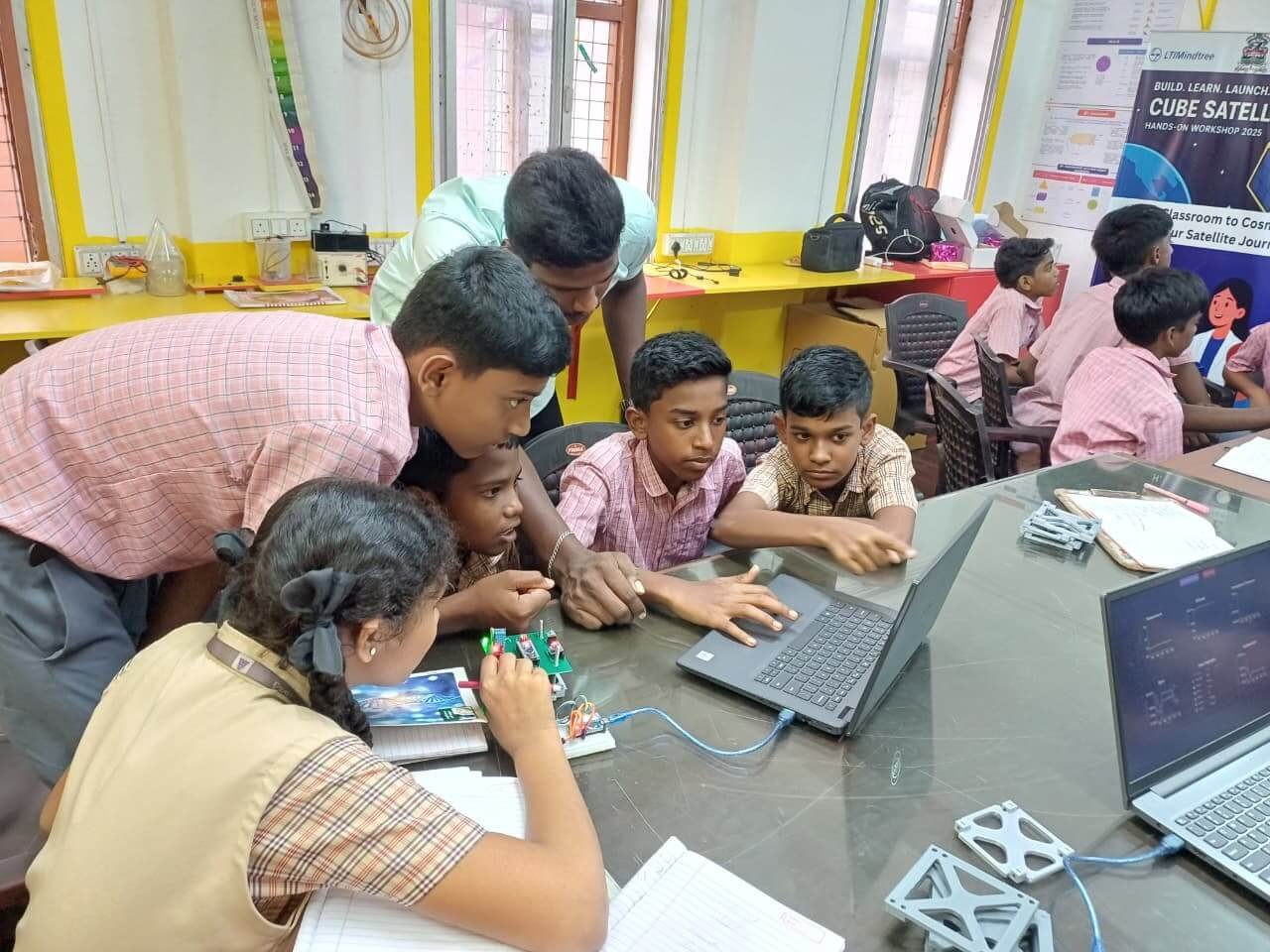
A hands-on CubeSat program can involve assembling a satellite kit, understanding its components and testing the system using a software dashboard.
What students learn:
- Introduction to CubeSat architecture and satellite subsystems
- Electronics and embedded hardware integration
- Sensors, data acquisition and telemetry concepts
- Hardware testing and troubleshooting
- Satellite data visualisation and dashboard interaction
Why it is unique: Satellite technology combines multiple engineering disciplines into one practical learning experience. It offers students an opportunity to explore space engineering without requiring access to an actual orbital satellite.
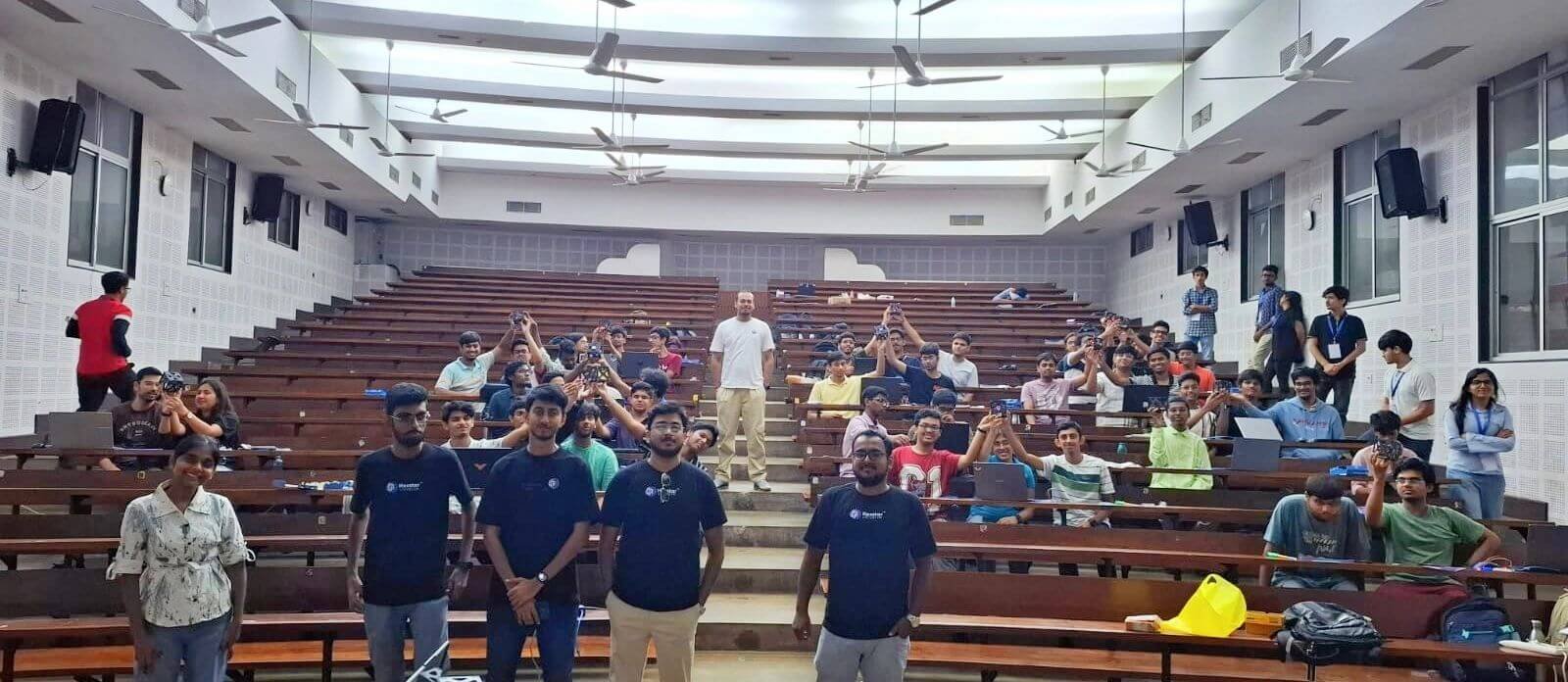
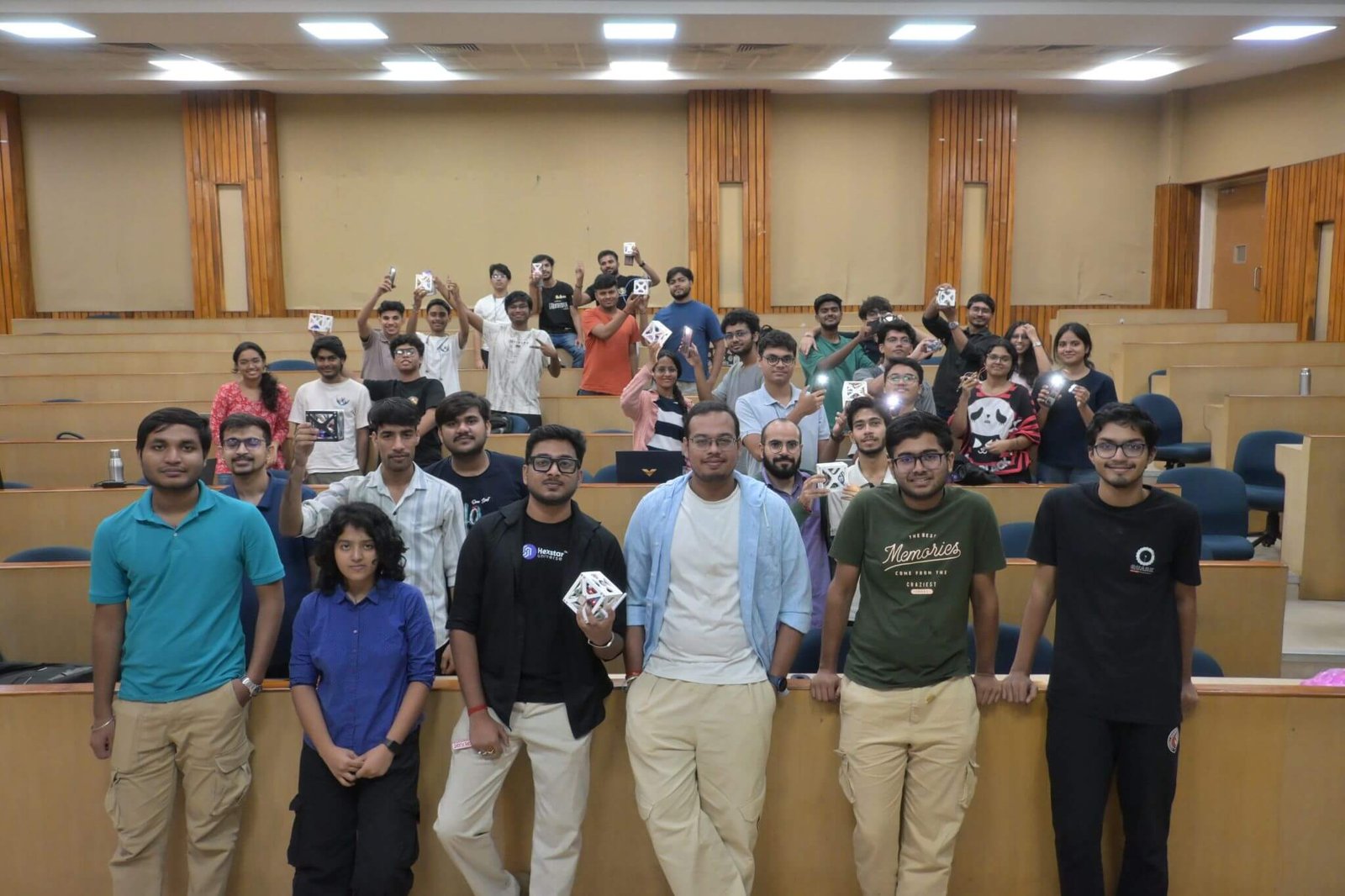
Hexstar Universe conducts hands-on CubeSat workshops for educational institutions. At IIT Kharagpur, more than 50 students participated in a workshop where 30 CubeSat kits were assembled and tested using the Hexstar Universe dashboard.
2. CanSat Design and Payload Integration Workshop
Best suited for: Aerospace, Mechanical, Electronics, Instrumentation and Computer Science students.
A CanSat is an educational aerospace project in which satellite-related systems are integrated into a compact structure, often designed around the size and shape of a can.
Unlike a conventional satellite workshop, a CanSat program focuses on designing and integrating a compact payload that can collect and transmit data during a mission or experiment.
What students learn:
- Payload design and integration
- Sensor selection and calibration
- Embedded programming
- Data acquisition and analysis
- Telemetry and mission planning
- Testing and validation
Why it is unique: CanSat activities encourage students to work through a complete engineering cycle, from conceptual design to payload testing. They can also be adapted into team-based competitions.
3. Water Rocket Design and Propulsion Workshop
Best suited for: Aerospace, Mechanical, Civil and Applied Physics students.
Water rockets offer an accessible introduction to rocket propulsion and experimental engineering. Students explore how pressurised water and air can generate thrust and how design choices influence a rocket’s flight.
A workshop can include designing, assembling and testing water rockets under appropriate safety supervision.
What students learn:
- Fundamental principles of thrust and propulsion
- Pressure and fluid mechanics
- Aerodynamics and stability
- Experimental design
- Flight observation and performance analysis
Why it is unique: Students can observe engineering principles in action. This makes water rocketry particularly suitable for technical festivals, introductory aerospace activities and interdisciplinary engineering events.
Hexstar Universe has organised a water rocket competition at Heritage Institute of Technology, Kolkata.
4. Space Robotics and Autonomous Systems Workshop
Best suited for: Robotics, Mechanical, Electrical, ECE and Computer Science students.
Space robotics explores the engineering behind robotic systems designed to operate in challenging environments such as planetary surfaces, space stations and extraterrestrial missions.
A workshop can introduce students to robotic movement, control systems, sensors and autonomous behaviour through educational robotic platforms.
What students learn:
- Robotics fundamentals and system architecture
- Sensors and actuators
- Embedded systems and control
- Autonomous navigation concepts
- Robotic manipulation and problem-solving
Why it is unique: It connects conventional robotics with real-world aerospace applications, giving students an opportunity to explore an emerging engineering domain.
5. AI and Machine Learning for Space Applications
Best suited for: Computer Science, AI and ML, ECE, Data Science and Aerospace Engineering students.
Artificial intelligence is increasingly relevant to satellite data analysis, remote sensing, autonomous operations and space mission planning.
This workshop introduces students to applications of machine learning in the space sector through practical demonstrations and guided projects.
What students learn:
- Introduction to AI and machine learning workflows
- Satellite imagery analysis
- Image classification and object detection
- Data-driven prediction
- Applications of AI in space systems
Why it is unique: Students explore AI beyond conventional datasets and discover how machine learning can be applied to satellite imagery, environmental monitoring and aerospace applications.
6. Remote Sensing and Satellite Image Analysis Workshop
Best suited for: Civil Engineering, Geography, Environmental Engineering, ECE, Computer Science and Geoinformatics students.
Remote sensing uses satellite or airborne sensors to collect information about the Earth’s surface without direct physical contact.
A practical workshop can introduce students to satellite imagery and the tools used to analyse geographical and environmental information.
What students learn:
- Introduction to remote sensing and satellite imagery
- Image processing and visual interpretation
- Land-use and land-cover analysis
- Environmental monitoring applications
- Introduction to GIS tools and geospatial datasets
Why it is unique: It demonstrates how satellite technology contributes to agriculture, disaster management, urban planning, environmental science and infrastructure development.
7. Drone Technology and Autonomous Flight Workshop
Best suited for: Aerospace, Mechanical, ECE, Electrical and Computer Science students.
Drones combine mechanical design, electronics, control systems, sensors and software. A workshop can introduce participants to drone architecture, flight systems and autonomous navigation concepts.
Depending on the program, students can explore drone assembly, simulation, control systems and practical demonstrations.
What students learn:
- Drone components and system architecture
- Flight controllers and sensors
- Principles of stability and control
- Autonomous navigation concepts
- Applications in surveying, agriculture and inspection
Why it is unique: Drone technology offers an interdisciplinary engineering experience connecting hardware, software and real-world applications. Practical flight activities must comply with applicable DGCA regulations and safety requirements.
8. Embedded Systems and IoT Hardware Workshop
Best suited for: ECE, Electrical Engineering, Instrumentation, Computer Science and Mechanical Engineering students.
Embedded systems and the Internet of Things form the foundation of many modern engineering applications, from industrial automation to smart devices.
A hardware-based workshop can introduce students to microcontrollers, sensors, communication modules and connected systems.
What students learn:
- Microcontroller programming
- Sensor interfacing
- Hardware-software integration
- Wireless communication fundamentals
- Real-time data monitoring
- IoT applications and prototyping
Why it is unique: Students can build functional prototypes rather than limiting their learning to software simulations. The workshop can also be extended into interdisciplinary projects.
9. Satellite Communication and Ground Station Workshop
Best suited for: ECE, Electrical Engineering, Aerospace and Communication Engineering students.
How does a satellite communicate with a station on Earth? This workshop introduces students to the fundamentals of satellite communication and ground station systems.
Participants explore how satellite signals are received, processed and interpreted through educational demonstrations and practical activities.
What students learn:
- Introduction to satellite communication systems
- Radio frequency fundamentals
- Antennas and signal propagation
- Ground station architecture
- Telemetry and communication concepts
- Signal processing fundamentals
Why it is unique: It provides students with a practical introduction to communication technologies used in satellite systems and aerospace applications.
10. Rocket Propulsion and Aerospace Engineering Workshop
Best suited for: Aerospace, Mechanical, Chemical Engineering and Applied Physics students.
Rocket propulsion is an exciting engineering domain that combines thermodynamics, fluid mechanics, material science and physics.
An educational workshop can introduce propulsion principles through conceptual sessions, simulations, demonstrations and appropriate educational models.
What students learn:
- Fundamentals of rocket propulsion
- Thrust and momentum
- Introduction to propulsion systems
- Aerodynamics and flight stability
- Aerospace design and simulation concepts
Why it is unique: Students explore the engineering principles behind launch vehicles and spacecraft propulsion, connecting multiple subjects through one application-oriented learning experience.
11. 3D Printing and Additive Manufacturing Workshop
Best suited for: Mechanical, Manufacturing, Aerospace, Civil and Product Design students.
Additive manufacturing is transforming how engineering components and prototypes are designed and produced.
A practical workshop can introduce students to digital modelling, slicing software, 3D printing processes and design considerations.
What students learn:
- Introduction to additive manufacturing
- 3D modelling and CAD
- Design for additive manufacturing
- Slicing and print preparation
- Material selection and prototyping
Why it is unique: Students can move from a digital design to a physical prototype, gaining an understanding of modern manufacturing workflows.
12. Autonomous Robotics and Machine Vision Workshop
Best suited for: Computer Science, AI and ML, ECE, Robotics and Mechanical Engineering students.
Machine vision allows robotic systems to interpret visual information and make decisions based on their surroundings.
A workshop can introduce students to image processing, object detection and visual navigation through educational robotic platforms or guided projects.
What students learn:
- Computer vision fundamentals
- Image processing and object detection
- Camera and sensor integration
- Autonomous navigation concepts
- Robotics applications using visual information
Why it is unique: It combines AI, software and physical robotics into one interactive learning experience.
13. Space Law, Policy and Commercial Space Industry Workshop
Best suited for: Aerospace Engineering, Law, Management, Political Science and interdisciplinary student groups.
Space technology is not only about building satellites. It also involves policy, international cooperation, commercial activities and regulatory frameworks.
A workshop on space law and policy introduces students to the legal and organisational aspects of the growing space industry.
What students learn:
- Fundamentals of international space law
- Space treaties and regulatory frameworks
- Indian space policy and commercial space ecosystem
- Satellite licensing and mission authorisation concepts
- Space sustainability and orbital debris
- Commercial opportunities in the space sector
Why it is unique: It introduces a less commonly explored dimension of space education, making it relevant for interdisciplinary events and students interested in the business and policy side of aerospace.
14. Satellite Payload Design and Instrumentation Workshop
Best suited for: Aerospace, ECE, Instrumentation, Mechanical and Electrical Engineering students.
A satellite payload is designed to perform a specific mission, such as collecting environmental data, capturing images or conducting scientific experiments.
This workshop introduces students to the engineering principles behind payload development and instrumentation.
What students learn:
- Introduction to satellite payloads
- Sensor selection and instrumentation
- Payload architecture and integration
- Data collection and interpretation
- Mission requirements and testing
Why it is unique: Students learn to connect a scientific objective with an engineering system designed to achieve it.
15. Edge Computing and Deep Learning for Embedded Applications
Best suited for: Computer Science, AI and ML, ECE, Electrical Engineering and Data Science students.
Edge computing enables data processing closer to the source rather than relying entirely on remote cloud infrastructure.
A workshop can introduce students to lightweight machine learning models and embedded platforms that process data locally.
What students learn:
- Fundamentals of edge computing
- Deep learning model deployment
- Embedded AI applications
- Real-time data processing
- Hardware constraints and optimisation
Why it is unique: It connects artificial intelligence with hardware engineering and real-time applications, making it particularly relevant for modern embedded systems and intelligent devices.
How to Choose the Right Technical Workshop for Your College?
The best technical workshop depends on the institution’s objectives, participant background, available time and resources.
Before finalising a program, consider the following factors.
| Consideration | What to Evaluate |
|---|---|
| Student departments | Which branches will participate? |
| Technical level | Beginner, intermediate or advanced? |
| Workshop duration | 2–3 hours, half-day, full-day or multiple sessions? |
| Learning objectives | What should students build, test or understand? |
| Infrastructure | Hardware, software, lab space and equipment requirements |
| Participation format | Individual activities, teams or competitions? |
| Institutional goals | Skill development, innovation, technical fest or academic enrichment? |
| A well-designed workshop should match the students’ technical background while offering enough practical depth to make the experience meaningful. |
How Hexstar Universe Conducts Hands-On Technical Workshops
Hexstar Universe is a space education technology company focused on educational hardware, software and practical engineering experiences.
We work with schools, colleges, universities and technical organisations to introduce students to space technology through CubeSat kits, CanSat programs, rocketry activities, satellite technology training and related engineering workshops.
Our institutional portfolio includes engagements with IIT Kharagpur, Geetanjali Institute of Technical Studies, Birla Vishwakarma Mahavidyalaya, Christ University, C-DOT and international educational initiatives.
At IIT Kharagpur, more than 50 students participated in our CubeSat workshop, assembling and testing 30 CubeSat kits using the Hexstar Universe dashboard. At Geetanjali Institute of Technical Studies, more than 245 students participated in a large-scale CubeSat program involving stratospheric launch activities.
These experiences reflect our focus on practical learning, hardware-based exploration and institution-oriented programs.
Our workshops can be customised for:
- Engineering colleges and universities
- School STEM programs
- Department-level technical activities
- Annual technical festivals
- Student clubs and societies
- Innovation and entrepreneurship cells
- Inter-college technical competitions
Frequently Asked Questions (FAQs)
1. What are the best technical workshop ideas for engineering colleges in India?
Some of the most engaging technical workshop ideas include CubeSat building, CanSat design, space robotics, water rocketry, AI for space applications, remote sensing, drone technology, embedded systems, satellite communication and 3D printing. The best option depends on the students’ technical background and the institution’s objectives.
2. Which workshops are suitable for college technical fests?
CubeSat workshops, robotics activities, CanSat challenges, water rocket competitions, drone technology demonstrations, embedded systems projects and AI-based engineering activities can be incorporated into technical festivals. Interactive and team-based formats can encourage participation from students across departments.
3. What are some unique workshops for engineering students?
Workshops that combine hardware, software and practical experimentation are particularly engaging. Examples include satellite-building workshops, autonomous robotics, payload design, space technology, remote sensing, embedded AI and educational rocketry.
4. Which technical workshops are suitable for first-year engineering students?
Introductory CubeSat workshops, water rocket activities, embedded systems fundamentals, STEM hardware workshops and basic robotics programs can be suitable for first-year students when designed with appropriate prerequisites and guided instruction.
5. Can colleges organise space technology workshops for students?
Yes. Colleges can organise educational workshops on CubeSat technology, CanSat systems, satellite communication, remote sensing, rocketry, space robotics and related engineering subjects. These can be designed for individual departments or interdisciplinary student groups.
6. What is a CubeSat workshop?
A CubeSat workshop is a hands-on educational program where participants explore miniature satellite systems by assembling and testing educational CubeSat hardware. Depending on the program, students may learn about electronics, sensors, communication, telemetry, satellite subsystems and data visualisation.
7. What is a CanSat workshop?
A CanSat workshop introduces students to compact satellite-inspired systems that integrate sensors, electronics and data collection within a small payload. Participants can explore payload design, embedded programming, instrumentation and testing.
8. Are robotics workshops useful for engineering students?
Robotics workshops can help engineering students explore sensors, actuators, control systems, embedded programming, autonomous navigation and hardware integration. They also provide opportunities for interdisciplinary projects and practical problem-solving.
9. How can colleges organise technical workshops during annual fests?
Colleges can identify a target audience, select a relevant technical topic, define learning objectives, determine workshop duration and participation format, and collaborate with an experienced workshop provider. Practical activities, demonstrations and team-based challenges can make the event more engaging.
10. Who conducts hands-on technical workshops for engineering colleges in India?
Educational organisations, technology companies, engineering training providers and specialised STEM education companies conduct technical workshops for colleges. Hexstar Universe offers institutional programs focused on CubeSat technology, CanSat, space robotics, rocketry and hands-on space engineering.
11. Can technical workshops be customised for different engineering branches?
Yes. Workshops can be adapted for aerospace, mechanical, electrical, electronics, computer science, instrumentation and interdisciplinary student groups. The activities, complexity and learning objectives can be customised according to participants’ backgrounds.
12. How can an institution collaborate with Hexstar Universe for a technical workshop?
Institutions can contact Hexstar Universe to discuss the workshop topic, expected participants, duration, learning objectives and tentative dates. Programs can be explored for academic activities, technical festivals, STEM events and customised engineering initiatives.
Planning a Technical Workshop at Your Institution?
A well-designed technical workshop can give students an opportunity to explore engineering in ways that complement classroom learning.
Whether your institution is planning a technical fest, department-level activity, STEM program or hands-on training initiative, choosing an engaging technical topic is the first step.
Hexstar Universe works with educational institutions to organise hands-on CubeSat workshops, CanSat programs, space robotics activities, water rocket competitions and satellite technology training.
Let’s bring practical engineering and space technology to your campus.
Connect with Hexstar Universe
Website: https://hexstaruniverse.com
Institutional collaborations: network@hexstaruniverse.com
Phone / WhatsApp: +91 9330604060
Let’s build something meaningful for your students.